
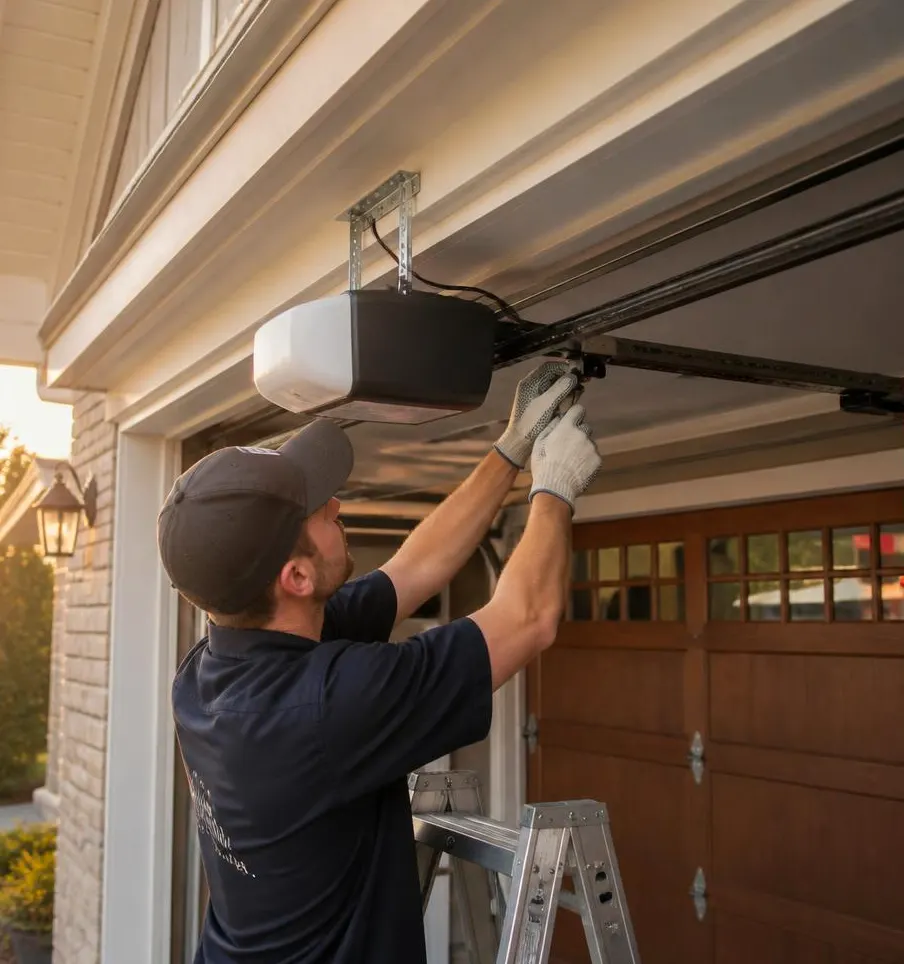
The mistake most homeowners make starts with good intentions. The door squeaks, there's a can of WD-40 already sitting on the shelf, and it gets sprayed on every moving part from the hinges to the track. It's tempting because it's cheap, familiar, and the squeak usually quiets down for a week or two. The problem is that WD-40 is a water-displacer and solvent, not a true lubricant. It evaporates fast, strips away whatever grease was already protecting the metal, and leaves behind a tacky residue that grabs dust and grit. In a climate like ours, where afternoon humidity and sudden downpours are a given for months at a time, that combination speeds up rust and grinding wear instead of preventing it.
Garage doors in this part of Florida work harder than people realize. Moisture swells wood panels, humidity accelerates corrosion on springs and hardware, and the wind-load bracing many homes need for hurricane season adds extra hinge points and stress on moving parts. Lubricating correctly, with the right product in the right spots, keeps everything moving smoothly and protected between storms.
What You'll Need
- Step ladder
- Safety glasses
- Work gloves
- Clean, dry rags
- A small stiff brush (an old toothbrush works)
- 100% silicone-based garage door lubricant spray
- White lithium grease
- Manufacturer-approved chain or rail lubricant for the opener
Step-by-Step: Lubricating Your Garage Door
- Disconnect and inspect first. Close the door and unplug the opener. Walk the full length of the track and look at every hinge, roller, and cable for rust, fraying, or visible wear before you touch any product.
- Clean before you lubricate. Wipe down tracks, hinges, and rollers with a dry rag to remove dust, pollen, and the gritty film that builds up fast in humid air. Lubricating over dirt just creates a paste that grinds parts down faster.
- Lubricate the hinges. Apply a light coat of silicone lubricant directly to each pivot point where the hinge bends. Work the door by hand if it's safe to do so, then wipe away anything that drips.
- Lubricate the rollers. Focus the spray on the bearings at the center of the roller, not the roller surface itself. Nylon rollers with sealed bearings need very little; metal rollers need a bit more attention since they're more prone to rust in our climate.
- Lubricate the springs. A light coat of white lithium grease on the coils helps reduce friction and rust. Never touch or adjust the winding cones at the ends of a torsion spring — that part is not a lubrication task.
- Lubricate the opener's chain, belt, or screw rail. Use only the lubricant the manufacturer recommends for that mechanism; the wrong product can gum up the drive over time.
- Leave the tracks alone. Clean them, but don't lubricate them. Grease on the track attracts dirt and can make rollers slip instead of roll smoothly.
- Cycle the door and wipe excess. Reconnect the opener, run the door up and down a few times, and wipe off any lubricant that's pooled or dripped before it has a chance to attract dust.
What to Use and What to Avoid
Stick with 100% silicone spray lubricant or white lithium grease — both hold up well in heat and humidity and don't wash out as quickly as lighter products. Avoid WD-40 for ongoing maintenance, avoid regular motor oil or cooking oil (too thick, and they attract grit in humid air), and avoid grease on the tracks themselves. More is not better here; a thin, even coat lasts longer and stays cleaner than a heavy application.
Homeowner Jobs vs. Technician Jobs
Cleaning hardware, lubricating hinges and rollers, applying a light coat of grease to spring coils, and lubricating the opener's rail are all reasonable DIY tasks with basic tools. Adjusting spring tension, replacing a spring, realigning a door that's come off its track, or diagnosing an opener that's grinding, reversing, or not responding are technician jobs. Springs under tension and cables under load can cause serious injury if handled incorrectly, and misaligned tracks often mean bent hardware that needs to be assessed in person.
When to Call Lake Butler Garage Door Pro
If you've cleaned and lubricated everything correctly and the door still grinds, shudders, or sticks partway through its cycle, that usually points to a problem lubrication won't fix — worn rollers, a stretched spring, or cables starting to fray. Our Garage Door Maintenance & Tune-Up service covers a full inspection of springs, cables, and hardware so small issues get caught before they turn into an off-track door during a storm. If parts are too worn to clean up, our Cable & Roller Replacement service gets them swapped out and the door running quietly again.
If your garage door needs more than a fresh coat of lubricant, call Lake Butler Garage Door Pro. We serve homeowners throughout Lake Butler, FL and the surrounding area, and we're ready to help keep your door running smoothly through every season.