
The Short Version
As a rule of thumb, pitch tells you where the problem lives: high-pitched squeals usually mean friction and dry metal, while low grinding and rattling usually mean something is loose, worn, or misaligned. The exceptions are sharp bangs and pops, which can be completely normal spring settling one day and a warning sign of cable or hardware trouble the next. Context matters as much as the sound itself — how often it happens, when in the door's travel it occurs, and whether it's gotten louder over the past few weeks.
Here's how a technician actually works through each noise, in the order they'd check things, so you know what you're dealing with before you call anyone.
Grinding: A Deep, Harsh, Metal-on-Metal Sound
Grinding usually shows up during opening or closing and often comes with noticeable vibration in the door or track. It's one of the least ignorable noises because it tends to get worse fast.
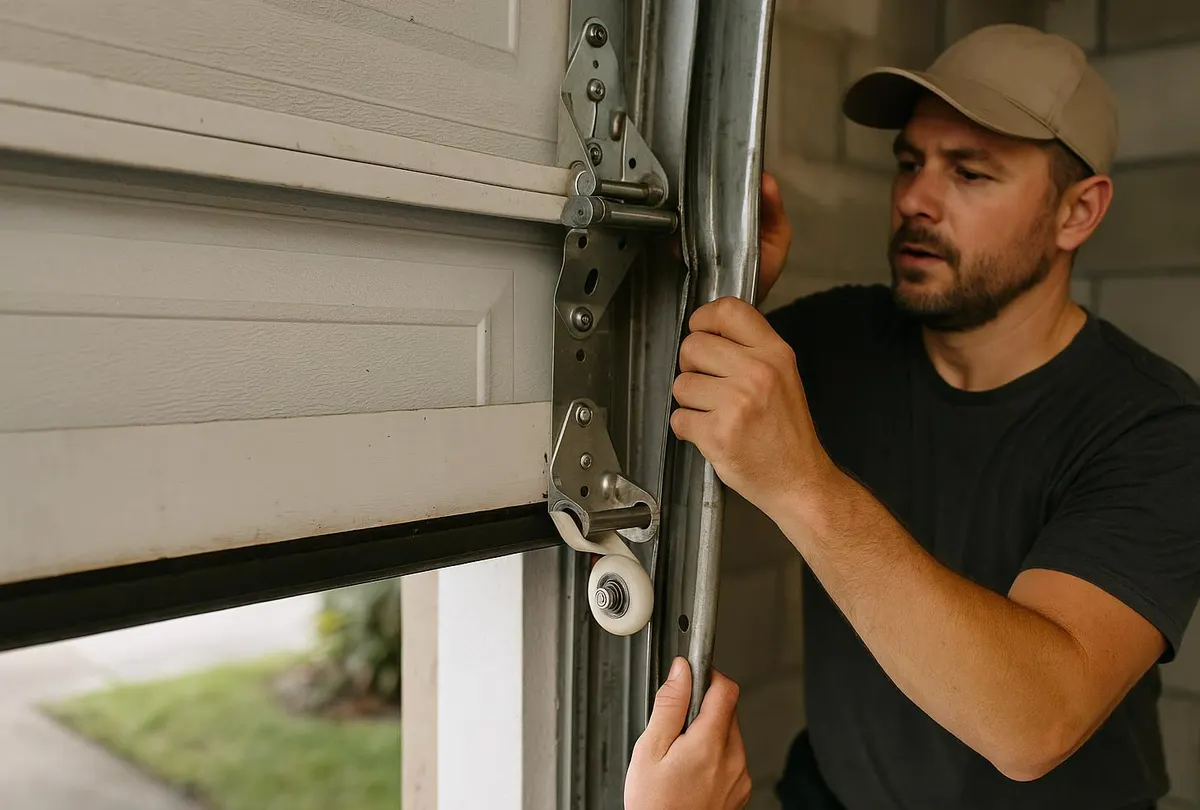
- Worn rollers. Nylon rollers with failing bearings grind as they turn in the track. This is the first thing checked because it's the most common cause and the easiest to confirm visually.
- Stripped opener gear. Many openers use a plastic drive gear that wears down over years of use, especially with heavy doors. A stripped gear grinds right at the motor housing.
- Bent or misaligned track. If rollers are binding against a track that's knocked out of alignment, the door rubs metal-on-metal with every cycle.
- Torsion spring binding on its shaft. Less common, but a spring rubbing against a bent shaft or bracket produces a grinding sound at the top of the door.
The fix depends on which of these is confirmed: roller replacement is straightforward, a stripped gear means opening the opener housing and swapping the part, and a bent track requires loosening the brackets and realigning it — or replacing the section if it's bent badly.
Squealing: High-Pitched and Constant Through the Door's Travel
Squealing is almost always friction-related and tends to happen through the full range of motion rather than at one specific point.
- Dry hinges and rollers. This is checked first because it's the most common cause, especially after a stretch of humid weather followed by a dry snap, which strips lubricant off metal parts faster than people expect.
- Worn roller bearings. If lubrication doesn't quiet it down, the bearings themselves may be worn past the point of helping.
- Bare torsion spring coils rubbing together. Springs need their own lubrication, separate from hinges and rollers, and this gets checked next.
- Opener chain or belt tension. A chain-drive opener that's too loose can squeal against the rail as it moves.
The fix for most squealing is a proper lubrication pass with a silicone-based garage door lubricant on hinges, rollers, and springs — not household oil, which attracts grit and gums up over time. If lubrication doesn't resolve it within a day or two, the rollers or chain tension need attention.
Popping: A Sharp Bang or Crack
Popping is the trickiest noise to diagnose by ear alone because it can mean almost nothing or something serious.
- Spring settling. New or recently adjusted torsion springs sometimes pop lightly as they seat into their final position. This is checked first and ruled out if the door is working fine otherwise.
- Panel flexing from temperature and humidity swings. Steel panels expand and contract, and wood or wood-composite doors absorb moisture and swell. A pop as the sun hits the door in the morning is often just material movement.
- Loose hinge or bracket hardware. Bolts that have worked loose from vibration — including the vibration from wind during storm season — can shift slightly and produce a pop each time the door moves.
- Cable jumping the drum. This is checked last because it's the most serious: a cable that's slipped off its drum can pop audibly and is a sign the door needs to come out of service until it's inspected.
If the popping is occasional and the door operates normally, hardware inspection and tightening usually solves it. If it's frequent, getting louder, or paired with the door looking crooked, that points toward cable or spring wear that needs a professional look before the door is used again.
Rattling: A Loose, Continuous Shake
Rattling tends to run through the entire cycle rather than spiking at one point, and it's the noise most directly tied to time and weather here.
- Loose hardware. Bolts, hinges, and brackets loosen gradually from years of vibration, and afternoon storm winds pushing against the door add extra stress that speeds this up. This is checked first with a simple hardware pass.
- Loose opener chain. A chain with too much slack rattles against the rail, especially noticeable right as the door starts moving.
- Worn rollers rattling in the track. Once rollers develop play, they rattle rather than roll smoothly.
- Loose track brackets. If the track itself isn't tightly secured to the wall studs, the whole assembly shakes during operation.
The fix is usually a full hardware tightening pass with a socket wrench, chain tension adjustment, and roller replacement where there's visible play. Loose track brackets need to be re-secured to solid framing, not just tightened in place.
When to Call Lake Butler Garage Door Pro
If tightening hardware and lubricating moving parts doesn't quiet things down within a few cycles, or if you're hearing grinding, repeated popping, or a noise that's changed in character over a short time, it's worth having it looked at before a minor issue turns into a stuck or off-track door during the next round of storms. A Garage Door Maintenance & Tune-Up covers hardware, rollers, springs, and track alignment in one visit and catches most of these issues before they get loud. If the noise is already tied to visible wear, Cable & Roller Replacement handles the parts most likely to be at fault.
If you're hearing something off in Lake Butler, Starke, Worthington Springs, or anywhere nearby, give Lake Butler Garage Door Pro a call. We'll figure out exactly what's making the noise and get it fixed right the first time.